


Marrakech food specialties start with a dish you will not find anywhere else: tanjia, a clay jar of beef or lamb slow-cooked in the embers of a hammam furnace. The rest of the list is Moroccan cooking at its best: couscous, tagines, pastilla, briouats and msemen, with mint tea at every stage of the day.
Street food lovers will find msemen in the morning, harira soup, and mechoui (whole roast lamb) in the alley of stalls on the north side of Jemaa el-Fna, where Chez Lamine Hadj Mustapha has sold it by weight since 1965. During Ramadan, harira and chebakia, rose-shaped pastries fried and coated in honey, are served to break the fast.
Staying in a villa? Several of our villas come with a cook who can prepare these dishes at home: ask for a tanjia, a Friday couscous or a pastilla for a special dinner. See villas with a private chef and what a fully staffed villa includes. For restaurants and markets, read Moroccan food in Marrakech: what and where to eat and Marrakech street food.
Couscous
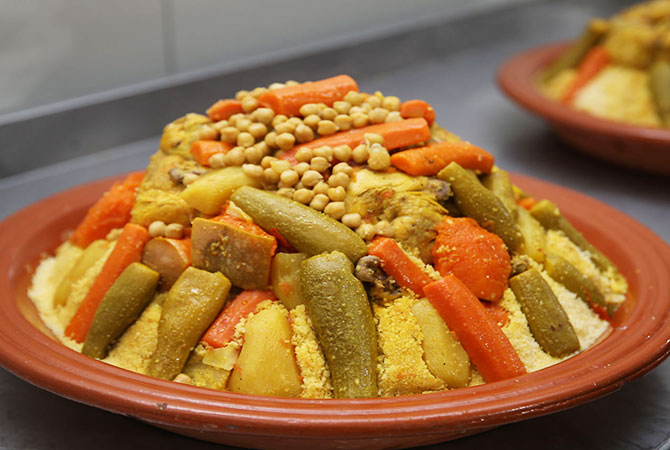
It is the essential specialty of Morocco! Couscous is the emblematic dish of the Maghreb: steamed semolina, usually served in a traditional terracotta dish with a stew of vegetables and meat such as beef, lamb or chicken. A classic version is couscous with seven vegetables.
In Moroccan homes, couscous is the Friday lunch, and some restaurants keep it for that day, such as the Friday couscous of La Grande Table Marocaine at the Royal Mansour. It takes hours of steaming, which makes it a good dish to ask your villa’s cook for, or to learn in a cooking class.
Tagine
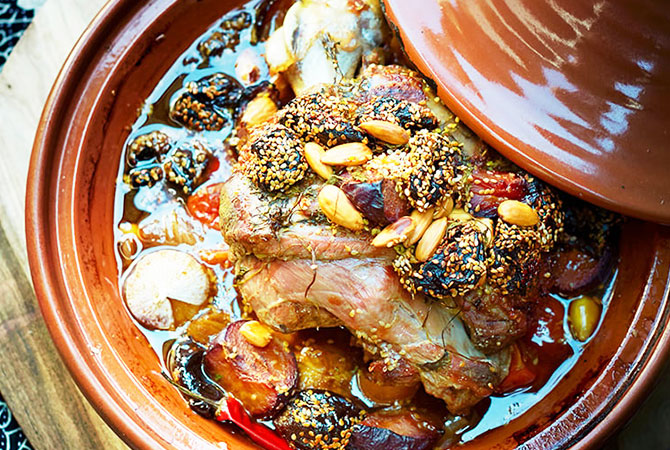
Family and friendly, the tagine is the traditional dish of Morocco, named after the conical clay pot it is slow-cooked in. The combinations are endless: chicken with preserved lemon and olives, lamb with prunes and almonds, kefta (meatballs) with eggs, fish, or vegetables only.
It is shared from the middle of the table and served with round loaves of bread (khobz), used to scoop up the sauce.
Tanjia
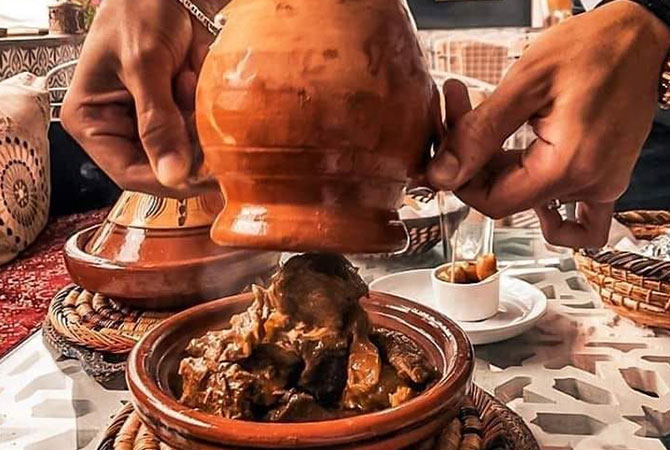
Tanjia is the symbolic dish of Marrakech, named after the clay jar it is cooked in. It was originally a bachelors’ dish. The jar is filled with pieces of beef or lamb, a marinade of salt, saffron, cumin and ras el-hanout, garlic, olive oil, preserved lemon, smen (aged salted butter) and a little water, then sealed with paper.
The know-how lies in the cooking. The jar is handed to the fernatchi, the man who keeps the wood-fired furnace of a hammam, who buries it in the hot ashes for half a day or overnight. The meat comes out meltingly tender. Try it at the stalls on the north side of Jemaa el-Fna.
Mint tea
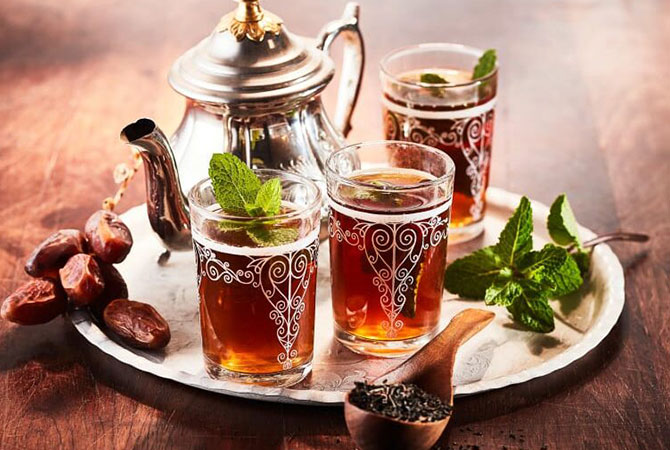
A symbol of conviviality and sharing, mint tea is the essential drink of Marrakech: Chinese gunpowder green tea brewed with fresh spearmint and sugar, then poured from high above the glass to make a light foam. It is offered when you arrive, after meals and in the middle of a negotiation in the souks.
It usually comes very sweet: ask for it with little sugar, or without (“bla sukkar”), if you prefer. Small pastries such as cornes de gazelle often come with it.
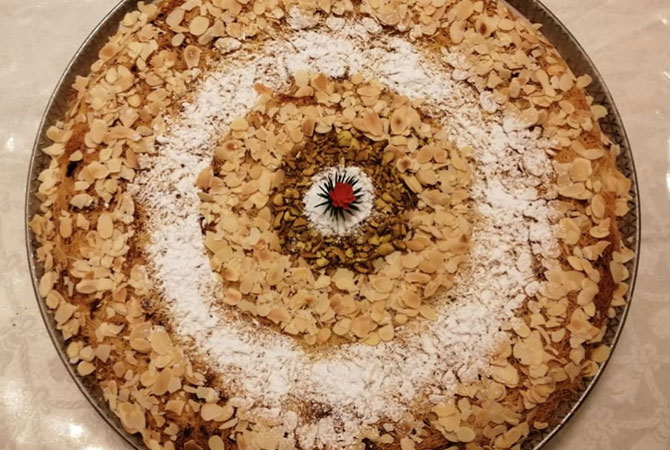
Pastilla
Pastilla (or bastilla) is a pie of paper-thin warqa pastry, similar to filo. The festive version fills it with shredded pigeon or, more often today, chicken, cooked with onions and spices, and almonds, and tops it with powdered sugar and cinnamon: sweet and savoury at once. It is a traditional dish for special events such as parties and weddings, served before the main course.
A seafood pastilla, made with fish and vermicelli, is spicy rather than sweet. For dessert, the milk pastilla layers warqa with a milk and almond cream. More dishes to try: 10 traditional Moroccan dishes.
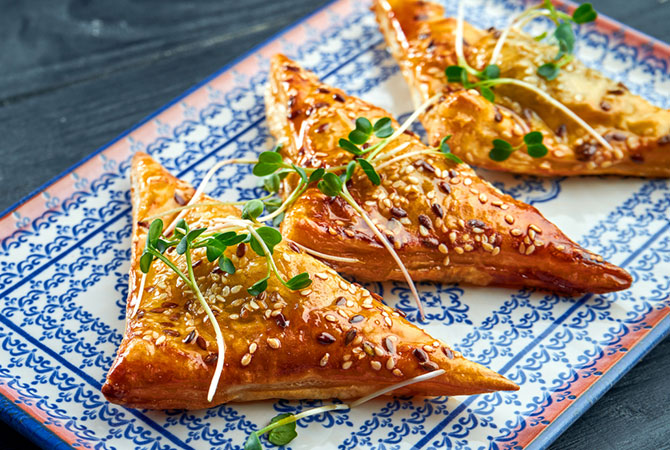
Briouats
Briouate, from a word meaning “envelope”, is a cousin of the samosa and the flagship appetizer of Moroccan aperitifs. These small parcels of warqa pastry are folded into triangles or rolled into cylinders, then fried or baked. Savoury briouats are stuffed with chicken, minced meat, fish, shrimp or cheese.
Sweet briouats are filled with almond paste, then dipped in warm honey flavoured with orange blossom water.
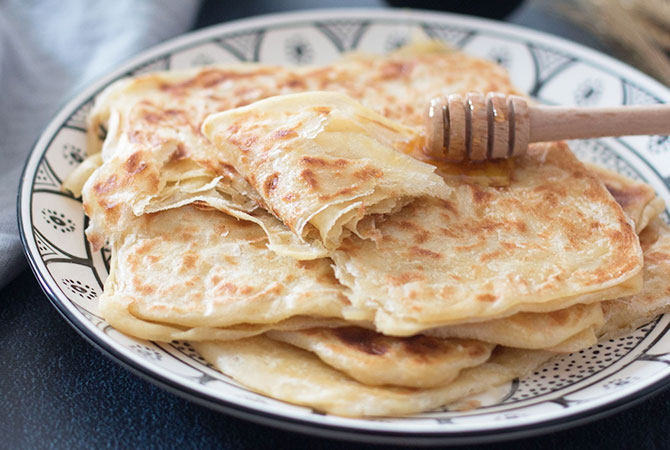
Msemen
Msemen is the delicious and delicately flaky pancake of the Maghreb: the dough is brushed with oil or butter, folded into a square and cooked on a hot griddle. It can be enjoyed sweet, with honey, or savoury, stuffed with onions, spices or minced meat.
It is a breakfast favourite, sold warm on street stalls in the morning. Other breakfast breads to try: baghrir, the “thousand-hole” pancake, and harcha, a semolina bread. For an evening out, see our dinner shows in Marrakech.
Contact us
Need help or have questions? Our team is here to assist you. Fill out the contact form below: